

Citypost News Desk

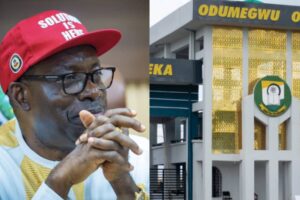
The management of Chukwuemeka Odumegwu Ojukwu University (COOU) has suspended Professor Chike Osegbue, a senior lecturer in the Department of Political Science and a leading contender in the institution’s last Vice-Chancellorship selection process, for three months over allegations that he failed to teach a postgraduate course.
The suspension, conveyed in a letter dated January 7 and signed by the Registrar, Chris U. Obi, on behalf of the Vice-Chancellor, bars Osegbue from entering the university premises throughout the suspension period unless officially invited. He was also directed to hand over any university or departmental property in his custody to the Chief Security Officer.
According to the letter, Osegbue is accused of not teaching PSC 811: Environmental Politics and Sustainable Development, allegedly assigned to him during the second semester of the 2024/2025 academic session.
The management said the suspension takes effect from early January 2026 and will last three months, pending the outcome of an investigation by the Senior Staff Disciplinary Committee.
The development followed earlier queries issued to the professor; first by the Acting Head of the Department of Political Science, Dr. Agary Nwokoye, in September 2025, and later by the Registrar in December 2025, both relating to the same allegation.
However, reacting to the suspension, Osegbue firmly denied refusing to teach the course, insisting instead that he declined to examine students who were, in his view, ineligible under the university’s postgraduate regulations.
Speaking to journalists in Awka on Sunday, the professor said he was available to teach PSC 811 but that no students were duly registered and eligible to be taught during the statutory lecture period. He argued that the students involved failed to meet the requirement of at least 75 percent lecture attendance over a minimum of nine weeks of intensive lectures, as stipulated by COOU’s postgraduate guidelines.
Osegbue further alleged that the students who petitioned against him were admitted between eight and 28 days to the commencement of examinations, making it impossible for them to satisfy the attendance requirement. He claimed that only one of the 12 students attended as many as two lectures.
“I cannot be coerced into examining students who did not attend lectures and were admitted barely weeks to examinations,” he said, adding that participating in such a process would amount to awarding unearned grades.
The professor also called on the Postgraduate Board to cancel all examinations written by students who did not meet eligibility criteria, arguing that doing otherwise undermines academic integrity and public confidence in the university’s certificates. He alleged that administrative and academic regulations had been serially abused, describing the situation as part of a wider culture of “certificate racketeering.”
In a more sweeping claim, Osegbue referenced reports by investigative committees set up by the university to probe alleged certificate racketeering in the Faculty of Law, which he said uncovered cases of students graduating without proper examination records. He alleged that those reports had been suppressed and not forwarded to the university council for action.
The suspension comes against the backdrop of an ongoing legal battle between Osegbue and the university over the appointment of Kate Omenugha as Vice-Chancellor. Osegbue is challenging the appointment in court, contending that Omenugha did not rank among the top three candidates as required by the university’s establishment law.
While the university maintains that the suspension is strictly a disciplinary matter related to teaching obligations, Osegbue insists it is punitive and unjustified, rooted in his refusal to compromise academic standards. The outcome of the disciplinary committee’s investigation is now expected to determine the next phase of the unfolding controversy at COOU.