

Transparency and truth in all dealings are virtues used to determine who a sincere and trustworthy leader is universally, but that cannot be said of a former Minister of Science and Technology, Mr Uche Geoffrey Nnaji, who has been fingered in numerous shady deals that defy every atom of transparency in their entirety and raise serious questions about how public resources may have been managed under his watch.
Documents in circulation point to a disturbing pattern of financial movement, questionable contracts, and transactions allegedly linked to him and close associates, especially siblings. While some may attempt to dismiss them, the content of these records calls for deep scrutiny, which also shows that under his watch, Nigeria was defrauded using different means.
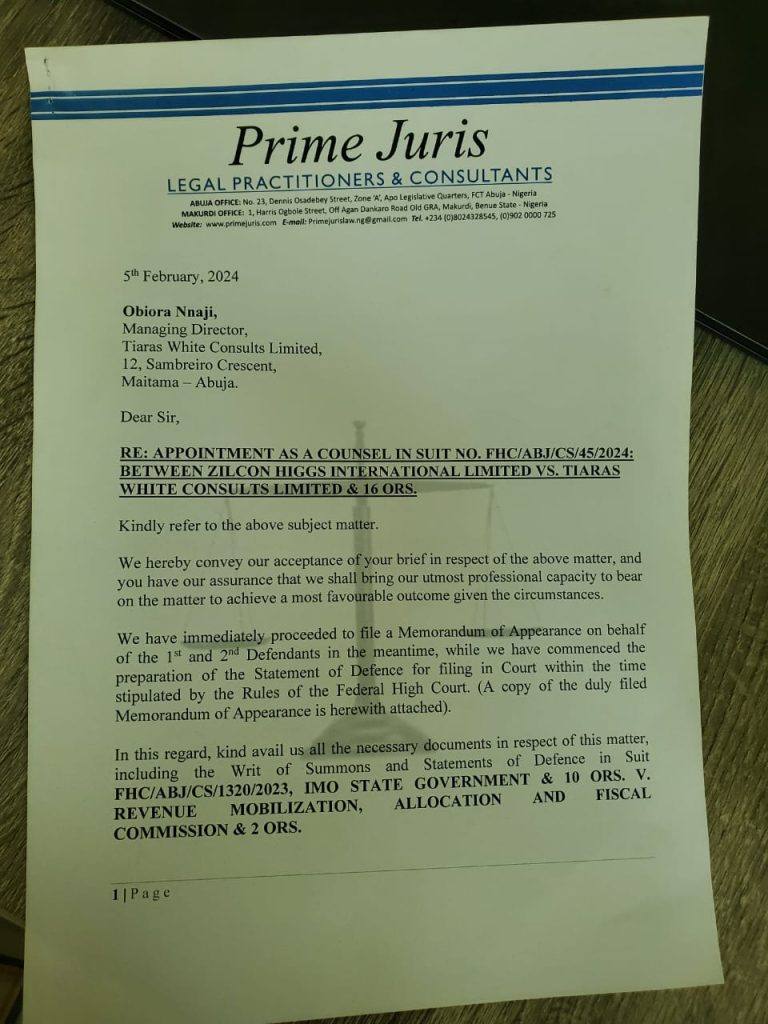
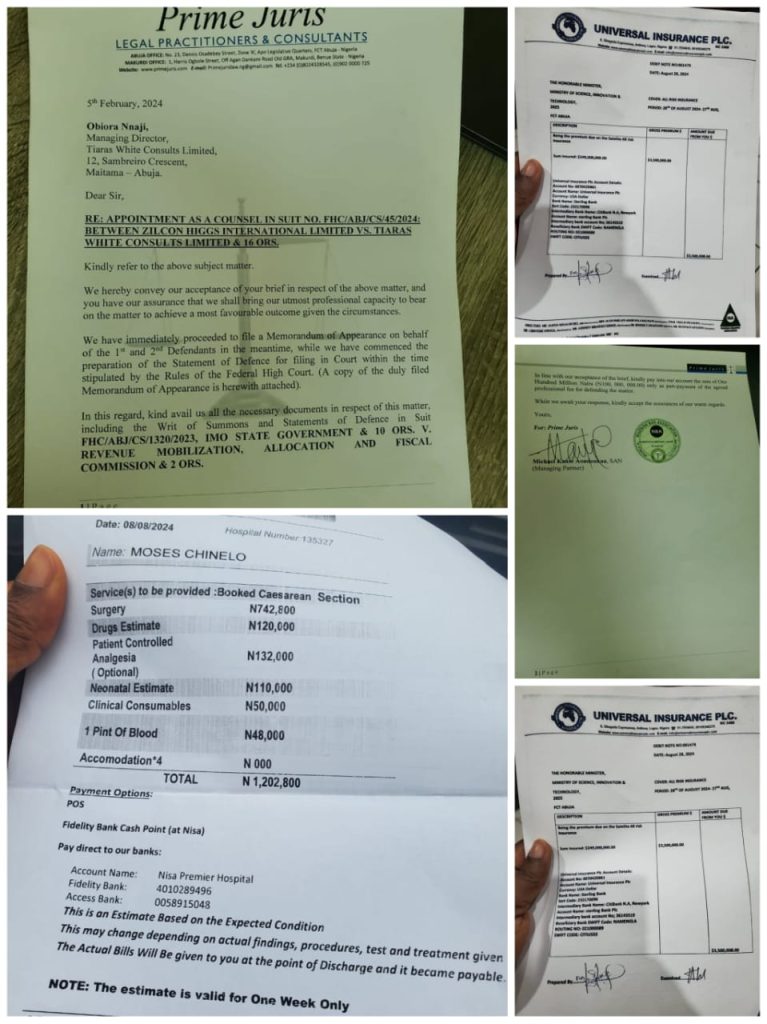
One of the documents is a legal letter from Prime Juris Legal Practitioners & Consultants dated 5th February 2024. It shows the law firm accepting a brief connected to Suit No. FHC/ABJ/CS/45/2024 involving Tiaras White Consults Limited and others. Most striking in the letter is the demand for a ₦100,000,000 part-payment as legal fees.
The letter, signed by Michael Kaase Aondoakaa, SAN, shows the rapid movement of high-value legal financing tied to individuals connected to the Nnaji network, including Obiora Nnaji, the younger brother of Mr. Uche Nnaji, listed as Managing Director of Tiaras White Consults Limited. The scale of the payment raises questions about funding sources and whether any public-linked funds were indirectly involved. It is clear that such fees could have been laundered using legal pseudo means.
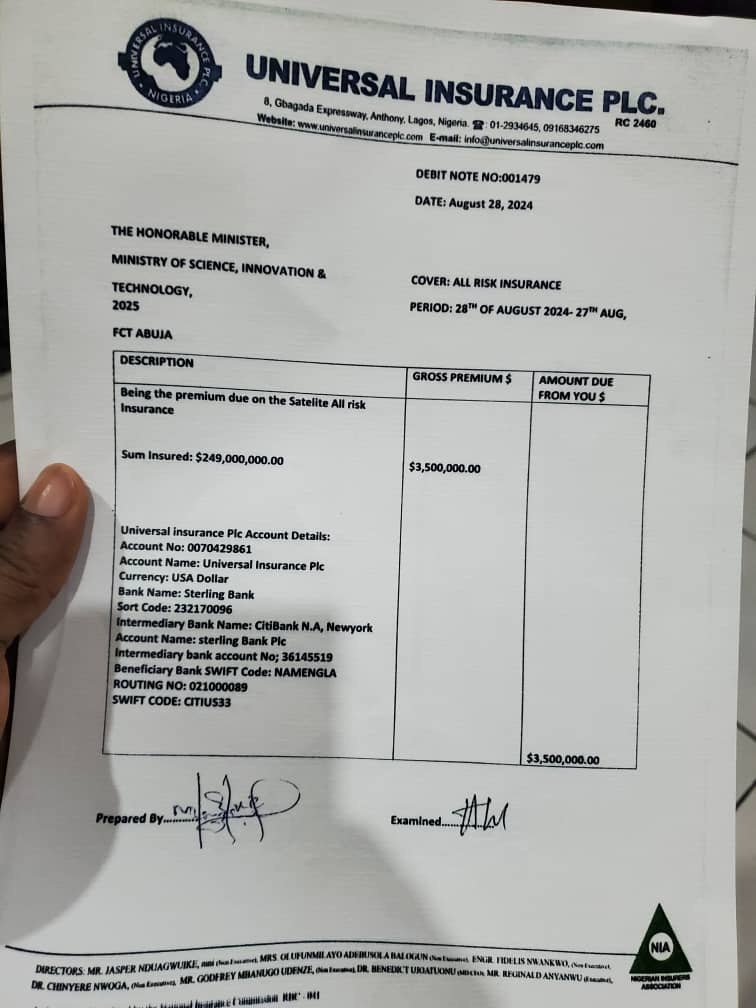
Another troubling document is a debit note issued by Universal Insurance Plc dated 28th August 2024. It shows an “All Risk Insurance” policy covering a satellite project under the Federal Ministry of Science, Innovation and Technology. The insured value was stated as $249,000,000 (₦373,500,000,000) with a premium of $3,500,000 (₦5,250,000,000) demanded. These amounts are over 15% of most states’ budgets in Nigeria and, by the nature it was prepared, it shows another pseudo way of siphoning public funds using insurance as a disguise.
The document lists government-linked offices and international banking channels, suggesting a complex financial structure. However, in all these documents seen, which were made possible through months of thorough scrutiny and investigations, there is no clear public record explaining the procurement process, approval chain, or actual execution of the insured satellite project. This gap creates suspicion of inflated contracts and possible diversion routes, which all happened under Mr. Nnaji.
Further review of related materials shows repeated involvement of companies and intermediaries linked to individuals sharing the Nnaji name. These repeated patterns of people who have affinity with the minister being involved in transactions of such volume of money is a strong sign that he may have used his office influence to route funds through private entities under controlled arrangements.
In these documents, a separate hospital estimate from Nisa Premier Hospital, dated 8th August 2024, was another shocking revelation that demands explanation rather than silence, as it has many unanswered questions.
When viewed together, the documents point to a system where legal fees, insurance premiums, and service estimates move in large sums without clear public accountability. The question that follows is simple: where did the money come from, and who truly benefited from these transactions?
In governance, perception matters as much as action. When documents of this nature surface, especially with glaring facts and figures, Mr Nnaji and his cohorts are expected to provide clarity, not avoidance or emotional blackmail. Failure to explain financial trails only deepens public suspicion.
Anti-corruption bodies, auditors, and oversight institutions would ordinarily be expected to examine such transactions, trace fund flows, and establish whether due process was followed. If everything is legitimate, disclosure should be easy. If not, then responsibility must be assigned.
Until such clarity is provided, the documents surrounding former Minister Uche Geoffrey Nnaji remain a serious subject of public concern and a reminder of how power, if not properly checked, can be abused through structured financial channels.